Why Traditions Can Change and Still Mean the Same Thing
Traditions can change without losing their meaning. Learn how to preserve valued parts, adapt a custom thoughtfully, and explain the choices across generations.
Can traditions change and still mean the same thing? Traditions can change without losing their meaning when people understand what a practice expresses and why its form is changing. The first useful move is to name the purpose, then decide which parts still serve it.
Consider the specific people and setting involved. A private family meal, a religious observance, and a community ceremony do not call for the same decision process. A family can make choices about its own gathering; a practice shared with a wider cultural or religious community calls for guidance from people who know its history and responsibilities.
Define what the tradition does in this setting
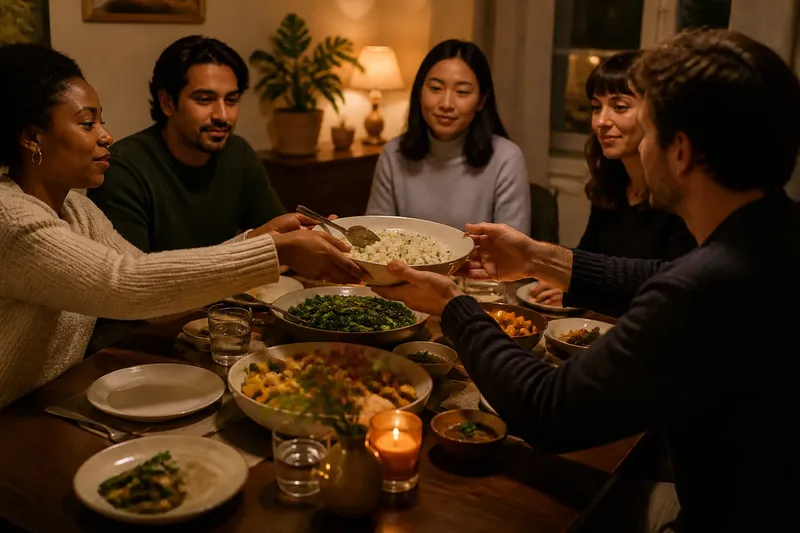
Describe the practice without judging it: who takes part, what happens, and what the occasion marks. A family meal might reconnect relatives, while a seasonal ceremony might mark a transition or express gratitude. These are possible purposes, not meanings to assign on other people's behalf.
Ask each participant what the practice means to them. Write the answers separately before discussing changes. If one person values a shared recipe and another values a religious observance around the meal, you have identified distinct commitments that may need distinct care.
Use a concrete record to keep the discussion focused. Note the activity, the people affected, the purpose each person names, and the part they would miss if it changed. This makes disagreement easier to discuss without deciding that one person's memory represents everyone.
Choose among preserving, adapting, pausing, or ending
There is no single decision that fits every custom. Use the situation to identify a reasonable next move:
- If participants name a shared purpose and a familiar action expresses it, keep that action recognizable; if its current form blocks participation, change the form while retaining the action.
- If a schedule or location keeps someone from joining, ask what access option they prefer; if they want to participate remotely or on another day, arrange that option, and if they would rather not join, respect the choice.
- If a practice belongs to a wider religious or cultural community, identify who has relevant knowledge; if community guidance is available, consult it before changing the practice, and if it is not, avoid presenting a private adaptation as the community's established form.
- If participants describe different meanings, list those meanings separately; if one activity cannot honor them all, make room for separate parts or occasions, and if people prefer not to combine them, let each continue in its own setting.
- If nobody involved can name a present purpose, discuss whether the practice should pause; if participants want time to reconsider, pause it openly, and if they value its history but not its repetition, record the history without requiring the activity to continue.
- If a change is disputed and reversible, identify one element to adjust; if participants agree to a trial, change only that element and set a time to discuss it, and if they do not agree, keep the current form while continuing the conversation.
These choices apply to the setting at hand. A decision within one household does not establish what is authentic for a larger community.
Keep continuity without making one version mandatory
When people want continuity, choose an action that clearly connects to the purpose they named. It could be telling a family story, preparing a recipe together, or pausing for remembrance. Keep that element recognizable, then consider whether timing, location, language, or leadership can change.
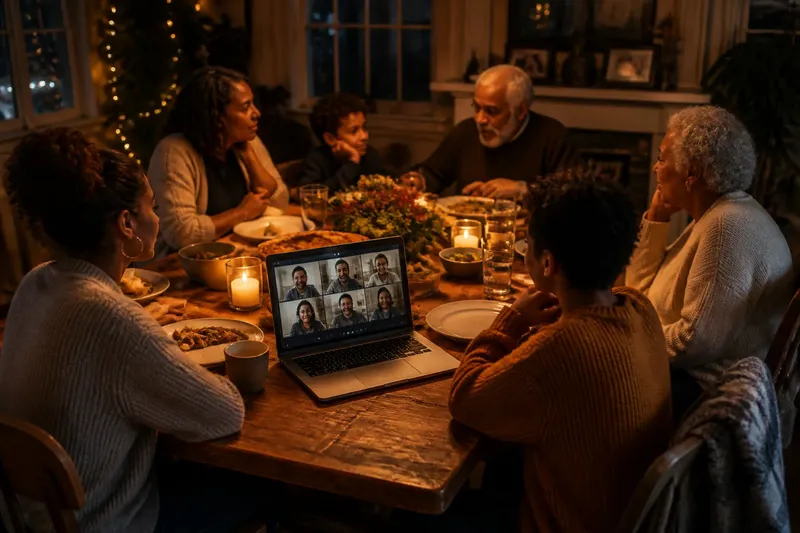
Say you are arranging a winter gathering after relatives have moved to different cities. The starting inputs are a story about a departed relative, an old expectation that everyone eat together in one home, and a group that wants to remember the person but cannot meet in that home. First, ask whether telling the story still matters to those taking part. Next, offer a video gathering or a separate day for the meal, while keeping the story as part of the occasion. Then explain that the meeting format changed because the relatives are in different places. The expected observable result is that participants can share the remembrance without being required to follow the former location or schedule; the tradeoff is that a remote gathering may not feel like sharing a meal in one room.
Familiarity alone does not establish that a detail must stay. Ask why people want to keep it, and hear the answer before proposing a substitute.
Adapt access with the affected people involved
A custom may become difficult to attend because of work schedules, disability, migration, language differences, religious practice, or changes in household structure. Identify the barrier before choosing a fix. A shorter gathering, translated materials, another location, or a remote option may help, but the person affected should not have to design the entire change.
Offer specific options and let people decline without having to justify themselves. Explain any change to the group so no one is left believing that the old form remains a hidden requirement. When a practice has community rules or responsibilities, seek informed guidance rather than treating access changes as a purely private matter.
Try a reversible change when people disagree
If some participants want continuity and others want a different form, isolate one element: location, length, language, or the way people contribute. Keep the other parts stable for now. Agree on what feedback to discuss afterward, such as whether people could participate and whether the purpose remained clear.
Imagine a family that disagrees about holding an annual gathering on the same day. The starting point is a shared wish to remember a relative, alongside conflicting work schedules. The group agrees to keep the remembrance story but try a different day, then checks whether those who previously missed the gathering could attend. The expected observable result is a clearer answer about access; the tradeoff is that the gathering no longer matches the old calendar date. If the family does not agree to the change, it can keep the date and discuss another way to share the story.
State plainly that the change is a trial, not a verdict on which relatives care more. A reversible decision gives people room to respond without pretending the disagreement has disappeared.
Explain changes so people can understand the history?
How do you tell which part of a tradition matters?
Ask participants what the practice helps them remember, express, or do together. Compare their answers and note where meanings differ instead of choosing one person's answer as the official version.
Who should decide whether a tradition changes?
For a private family custom, include the people who take part and anyone directly affected by the change. For a religious or community practice, seek guidance from people with relevant knowledge and responsibilities.
Does changing a tradition make it less authentic?
Not automatically. Describe what changed and why, and distinguish a family's adaptation from a form recognized by a wider community.
What can you do if relatives disagree?
Name the particular element in dispute and the meaning people fear losing. If the group agrees, try one reversible change; otherwise, keep the current form while continuing the discussion.
Pass on the reason as well as the action
Tell children and newer participants why a practice matters to the people who continue it. Describe which details have changed, who made those choices, and what participants hope to preserve. Avoid presenting a family's current form as an unchanging rule for everyone.
Invite younger participants to shape a genuine part of the practice. They might suggest a song, write down a recipe in their own words, or choose a way to include a relative who cannot attend. If a custom is shared beyond the family, check that the proposed role fits its community context.
For traditions changing across generations, a clear account of the purpose and the choices made is more useful than a claim that nothing ever changed. Start by recording one participant's own explanation of what the practice means and what they hope it will make possible.