At the Market, Listen for the Words Between Purchases
Market language observation helps you notice how shoppers compare goods and ask for practical details, while keeping your notes respectful and non-identifying.
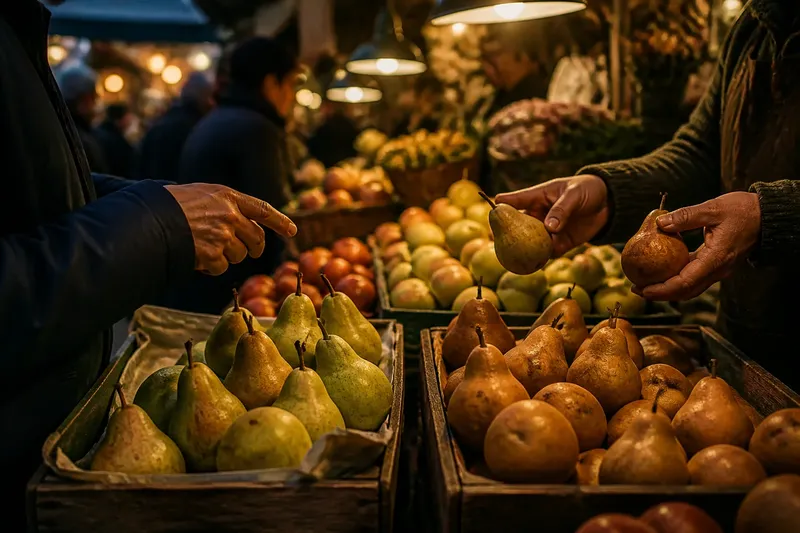
Market language observation starts when a shopper asks whether a loaf is sour or mild, and a baker points to the difference. If you want to understand how local markets describe goods, focus on those practical distinctions rather than following a particular person’s conversation. You can leave with useful cultural notes without recording voices or collecting private details.
Keep the subject narrow: words and gestures used to compare, select, and handle products. Note whether people refer to texture, ripeness, preparation, origin, or intended use. These observations describe a moment at one stall; they do not establish a rule for everyone in the market.
Market language observation focuses on product choices
Choose a public stall where you can observe without blocking the counter or queue. A produce stand, bakery, or flower stall may make product comparisons easy to notice. If foot traffic is tight, keep moving rather than lingering beside one customer.
Listen for the information that helps someone choose: a comparison between firm and soft fruit, a question about how a cheese is made, or a description of a flower’s scent. You do not need to understand every word. Note the kind of distinction being made, not a stranger’s exact phrasing.
Keep a simple note in mind: product, quality discussed, and how the choice is clarified. For written notes, use broad wording such as “shopper asked about firmness; seller indicated two textures.” Leave out names, appearance, and other identifying details.
Product descriptions reveal what shoppers need to know
Listen for descriptions tied to a practical decision. A seller might distinguish a tart apple from a sweeter one, or a shopper might ask which herbs suit a particular dish. The content can show which qualities matter in that exchange, without implying that the same preferences apply across the market.
Notice what brings the description into the conversation. It may follow a question, a gesture toward two displays, or a seller’s offer to explain the difference. Record the prompt and the type of information given, not a judgment about either person.
Say you visit a produce stall and hear a shopper ask which pears will soften sooner. The seller points to one crate, compares its texture with fruit in another, and the shopper chooses from the first crate. Your note could read, “Question about ripening; seller compared texture; shopper selected the softer group.” That records the sequence without identifying anyone or claiming the exchange represents every shopper.
Questions and gestures help explain a choice
A product question may concern size, freshness, ingredients, preparation, or suitability for a meal. Watch for a gesture that clarifies the answer, such as a seller indicating one basket rather than another. Describe the function of the gesture without guessing at the speaker’s feelings or intentions.
Some comparisons are visible even when the words are unfamiliar. Two products may be held side by side, or a seller may point to a label while answering. Note what you can observe directly, and mark anything uncertain as uncertain rather than turning it into a translation.
When the stall is busy, keep your attention on the goods and the general exchange. Do not lean closer to catch a sentence or follow a customer after the purchase.
Keep market notes useful and respectful
A public market is shared space, not a performance for visitors. Do not make audio or video recordings, photograph a private exchange, or write down names and identifying details. If someone notices your attention or seems uncomfortable, stop observing that interaction and move away.
Use this quick check before keeping a note. Each item gives an observation and a decision, with an alternative action if the condition is not met.
- If you can describe a product quality without quoting anyone, keep that general note; if you cannot, leave the wording out.
- If your position leaves the counter and queue clear, stay where you are; if it obstructs shoppers, move along.
- If you can observe the goods without tracking one person, note the product pattern; if you find yourself following a shopper, stop and shift your attention elsewhere.
- If a note contains no names or identifying details, keep it; if it could identify a speaker, remove those details or discard the note.
- If your phone stays put away, continue observing discreetly; if using it would draw attention or suggest recording, do not take notes there.
- If the exchange remains about goods, record only the broad product question and answer; if it turns personal, stop listening and move away.
If you want to learn a phrase, use a dictionary, class, or conversation with someone who has agreed to help. Ask a seller a practical question only when you are genuinely shopping and the moment allows it. Accept a short answer without pressing for more.
What details help explain a market choice?
Which product qualities should I notice?
Look for qualities that help distinguish goods, such as texture, scent, ripeness, ingredients, or suggested use. Write down the category of information rather than a stranger’s exact words.
How can I take notes without recording a conversation?
Remember the product, the quality discussed, and how the choice was clarified. Write a brief, non-identifying note after leaving the stall, and omit details you are unsure you can describe accurately.
Can a gesture be part of the observation?
Yes, if you describe what was visible, such as a seller pointing to one basket. Avoid assigning a motive or emotion to the gesture unless someone has explained it to you.
What should I do if I do not understand the language?
Note visible comparisons and the general kind of exchange, but do not invent a translation. For a phrase you want to learn, consult a reliable language resource or ask a willing conversation partner outside a busy transaction.
Separate what you saw from what you inferred
After leaving the stall, write one observation and one possible interpretation separately. “The shopper asked about firmness, and the seller pointed to two crates” is observable. “The seller thought the shopper was inexperienced” is an inference the exchange may not support.
If a note depends on a word you did not understand or a gesture you could not see clearly, leave that uncertainty visible. For market language observation, a modest description of how products were compared is more useful than a confident claim about what strangers meant.
Keep each visit focused on a product feature or type of question. The result is a set of respectful notes about how people discuss goods, not a record of individual customers. The practical boundary is simple: describe the choice-making detail, and leave the person out of it.